
The effect of rifle suppressors on muzzle velocity (MV) has long been a subject of considerable discussion among precision rifle competitors and enthusiasts. While some maintain that a suppressor has no discernible impact, others contend it can effectively lengthen a barrel, thereby increasing MV. To contribute objective data to this ongoing conversation, observations have been gathered from the same loads fired in the same rifles, both with and without suppressors, to assess if meaningful conclusions can be drawn. This process is part of a continuous data collection effort, and initial findings are now being shared.
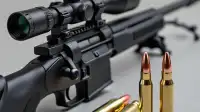
A primary focus of the collected data centered on a Ruger Precision Rifle chambered in 6.5 Creedmoor. For this specific evaluation, five distinct handloads, each utilizing 142-grain Sierra MatchKing (SMK) projectiles, were meticulously compared. These loads were fired under controlled conditions, first with the bare muzzle, and subsequently with a Q LLC suppressor attached. The aim was to isolate the variable of the suppressor and observe its direct influence on the recorded muzzle velocities for each load.
The results from the Ruger Precision Rifle test revealed a varied outcome rather than a consistent trend. Out of the five different 142-grain SMK loads evaluated, the rifle, when unsuppressed, exhibited a higher muzzle velocity for three of them. Conversely, for the remaining two loads within the same set, the rifle equipped with the Q LLC suppressor produced a higher muzzle velocity. This mixed performance across multiple, identical loads in the same platform underscores the complexity of predicting a universal velocity shift due to suppressor attachment. It suggests that any change is not uniform or predictably in one direction across all ammunition types.
Further insights were drawn from observations involving a Lithgow rifle paired with a Q can. In this instance, the collected data indicated that with certain ammunition types, a slight advantage in muzzle velocity was present when the suppressor was attached. While this observation points towards a potential increase in MV under specific conditions, it reinforces the notion that any effect is highly dependent on the particular rifle, suppressor, and ammunition combination. The consistent factor across these preliminary findings is the subtle nature of any observed velocity changes.
Based on the cumulative experience and the data gathered so far from these specific rifle and ammunition combinations, it is fair to assert that suppressors generally have a negligible effect on muzzle velocity. While minor fluctuations in either direction — slightly higher or slightly lower MV — have been observed depending on the specific load and rifle, these differences have not presented a clear, consistent, or significant pattern that would drastically alter ballistic calculations. This suggests that for the purposes of precise ballistic data management and load development within competitive long-range shooting disciplines, the impact of a suppressor on muzzle velocity, while present, falls within a range that can often be considered minimal. These early findings provide valuable context for shooters weighing the ballistic implications of integrating a suppressor into their precision rifle setup.